Why Your Japanese Knife Loses Bite Fast Even After a Perfect Sharpening Session
You spent two hours on stones. Felt like a surgeon. And two days later your Japanese knife is pushing tomatoes instead of slicing them. Here's the thing: it might not be you. A lot of brands slap "VG-10" or "super steel" on the box, but the heat treat is where the magic actually lives. Soft steel rolls. Hard steel chips. If your edge is dying fast, you might own a knife that was tempered down to 58 HRC because the factory didn't want returns from people chipping it. Edge retention problem? Blame the metallurgy before you blame your hands.
You Left a Wire Edge and Called It 'Sharp'
That satisfying slice through printer paper? It's a liar. A wire edge will feel scary-sharp right off the stone. For about six carrots. Then your knife loses bite fast because that microscopic foil of steel folds over like a cheap lawn chair. You need to feel for a burr, chase it, and actually remove it. Skip the deburring step and you're just polishing a mistake. Actually, a strop won't fix it either if the burr is still hanging on for dear life.
Your Cutting Board Is a Concrete Slab in Disguise
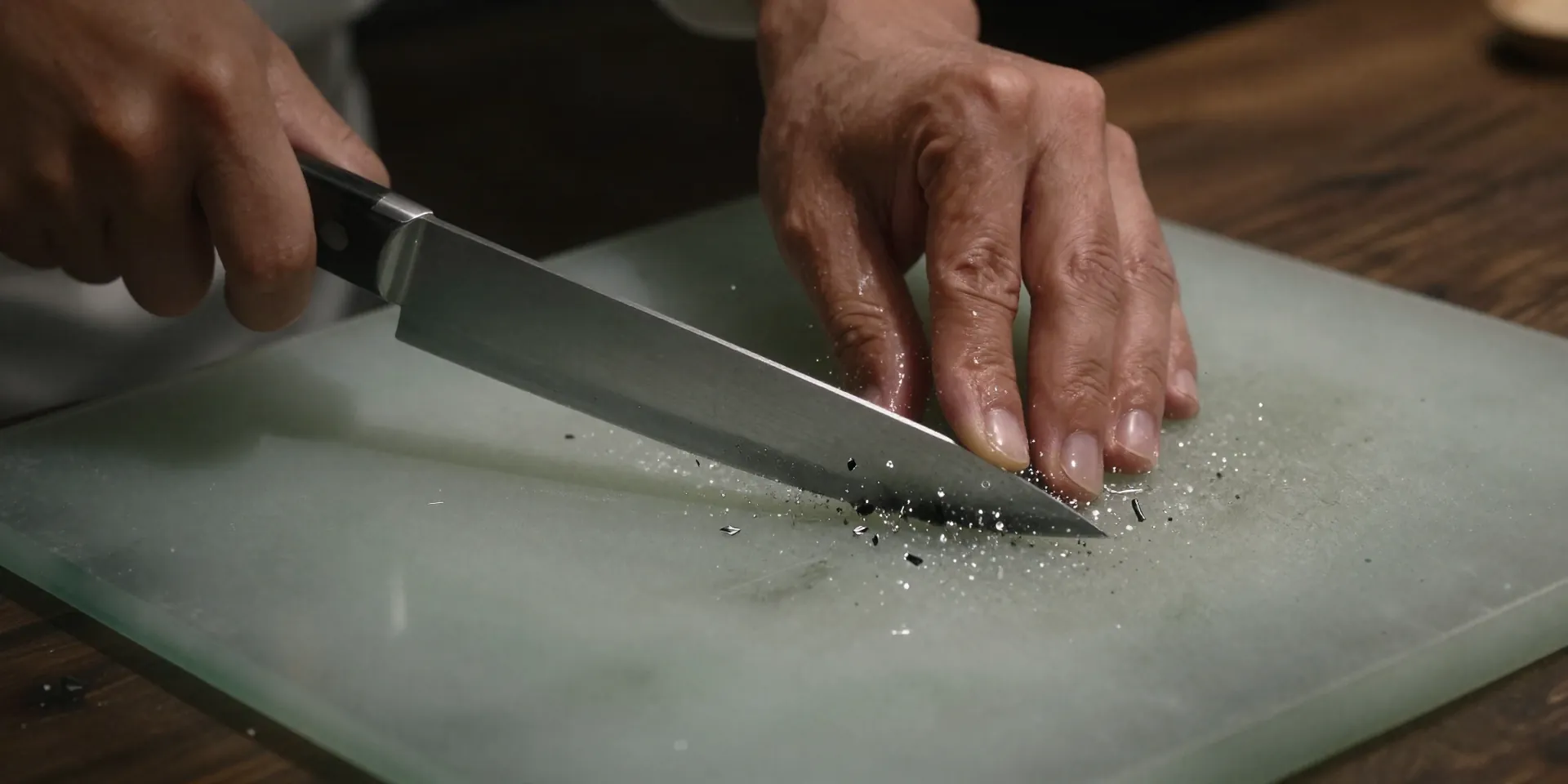
Glass boards. Bamboo boards. Those stupid marble slabs people use for cheese. Every time the edge hits that surface, you're running a destruction test you never asked for. A Japanese knife is thin behind the edge. Geometry matters. Slam it into a board with no give and you're fatiguing the steel with every chop. Get end-grain wood or a quality rubber board. Your edge will last three times longer. No contest.
Acid and Water Are Eating It Alive
Carbon steel lovers know this pain. But even stainless isn't immortal. Leave lemon juice on the blade for ten minutes and you're inviting microscopic pitting. Those pits become stress risers. Stress risers become chips. Chips mean your edge retention problem just got permanent. Wipe your knife down immediately. Dry it. Don't let it sit in a puddle of onion sulfides like some abandoned tool. This isn't high maintenance. It's the bare minimum for long-term edge care.
You're Stropping the Edge Into Oblivion
Stropping feels good. Smells good. Makes you look like you know what you're doing. But doing it too much rounds the apex. You trade bite for smoothness. A toothy edge cuts vegetables better than a mirror-polished butter knife. If you're stropping after every use for five minutes, you're probably solving a problem that doesn't exist while creating a new one. Touch up on a high-grit stone instead. Or just use a ceramic rod correctly. Less theater, more teeth.
The Geometry Itself Needs a Reset
After months of sharpening, you've crept up the bevel. The knife is thick behind the edge now. It wedges. It steers. And no matter how perfect your sharpening session is, the blade acts dull because the geometry is fighting you. This is where thinning comes in. It's annoying. It takes forever. But thinning restores the triangle. Without it, you're just sharpening a wedge. At some point, long-term edge care means admitting the blade needs rehab, not another quick touch-up.